Sign up for our newsletter!
Your data will be handled in compliance with our privacy policy.
Your data will be handled in compliance with our privacy policy.
Some years ago, in three articles, I outlined a vision where nanomaterials in general, and Smoltek’s proprietary nanotechnology platform in particular, would help in breaking barriers in several industries – especially in the semiconductor industry – bringing more supersmart gadgets to society.
S Kabir • December 19, 2025
So, what has happened since then [1, 2, 3]?
Well, the semiconductor industry is struggling with more or less the same bottlenecks as back then. Of course, technological development has been steady – especially considering the AI boom – but the biggest obstacles remain. Such as the need for smaller and thinner high-performance and energy-efficient capacitors.
However, with the rise of more powerful AI models comes a surge need for electricity to power these developments. And in this follow-up, I will delve into how Smoltek’s nanotechnology could play a significant role in the future of AI.
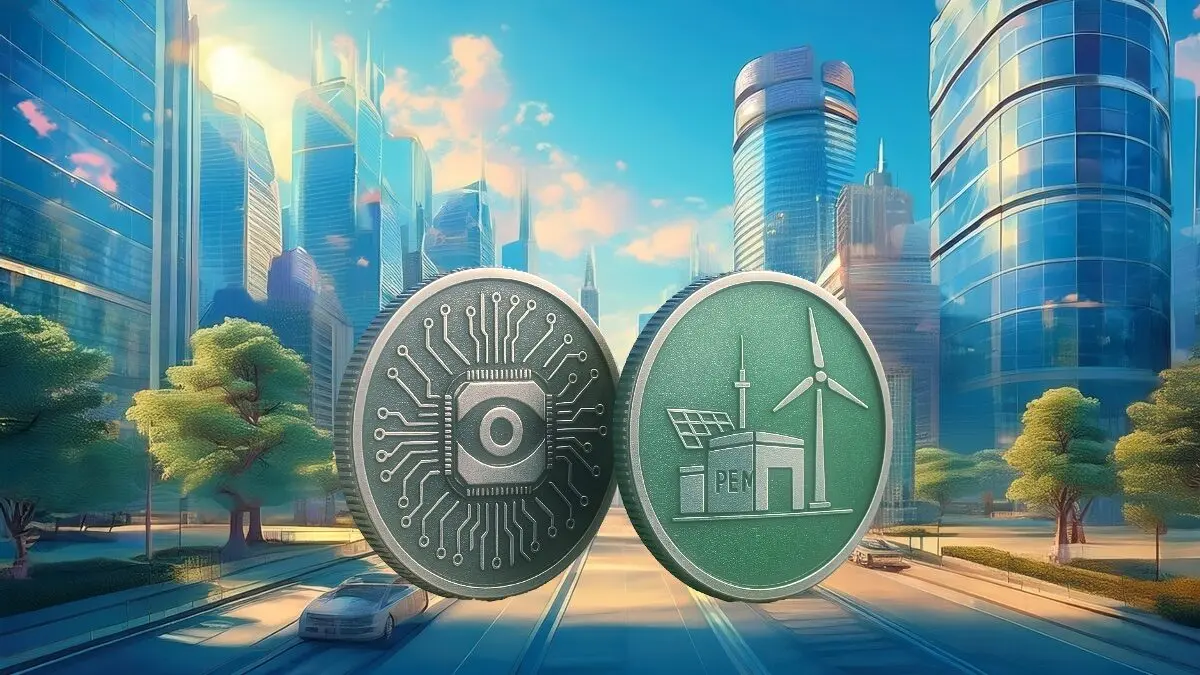
Artificial Intelligence (AI) is today reshaping the world — not only through algorithms and data, but also through the materials and technologies that enable its physical infrastructure. At Smoltek, this transformation is reflected in two distinct yet interconnected innovations: ultra-thin capacitors (developed by Smoltek Semi) and a low-iridium content electrode (developed by Smoltek Hydrogen). In my view, these innovations appear to represent two sides of the same coin, each contributing to the global pursuit of sustainable technology progress towards smarter and sustainable AI.
As someone deeply engaged in both academic research and industrial collaboration, my personal vision is to break down barriers and bridge the gap between research and industry. I am a strong believer that meaningful innovation happens when cutting-edge science meets real-world application. Smoltek’s dual path approach exemplifies this philosophy. I think it is fair to say that I am witnessing Smoltek’s dual path towards a sustainable future.
On one side of the coin is Smoltek Semi, which develops ultra-thin capacitors using proprietary carbon nanostructures. These components are designed for advanced semiconductor packaging, where space, performance, speed and efficiency in delivering energy to the digital circuit are critical. As AI systems grow in complexity, they demand faster, more compact and power-hungry digital hardware per footprint [4].
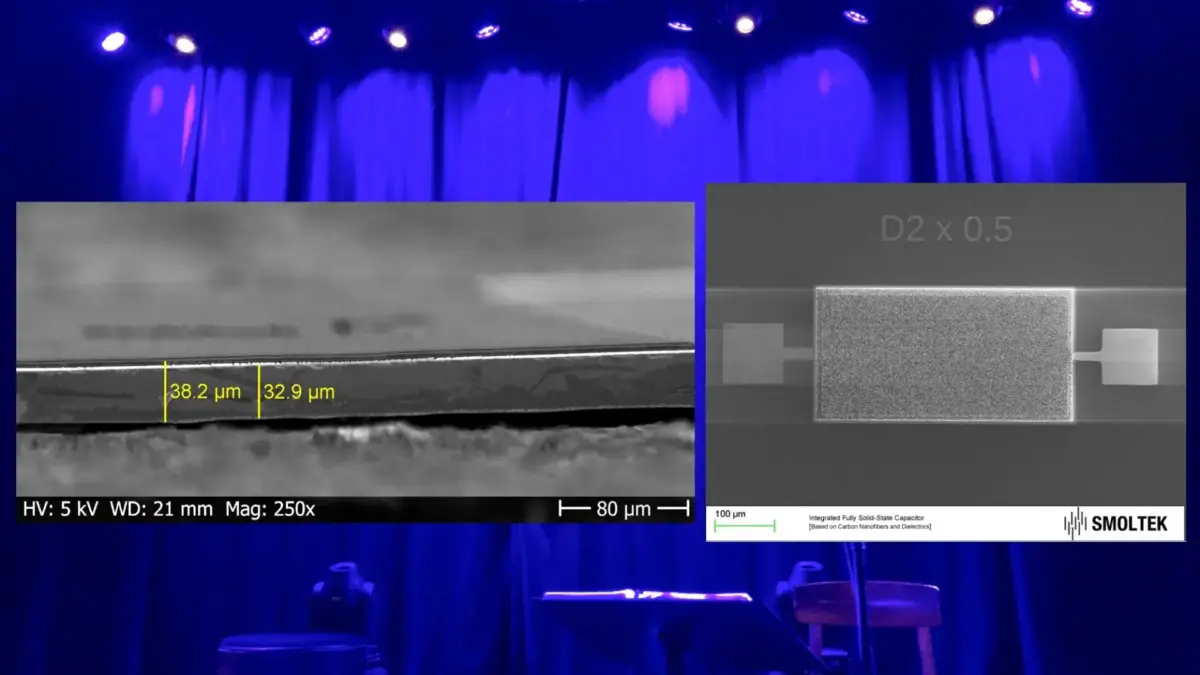
Smoltek Semi’s world’s thinnest capacitor [5, 10], a local energy storage reservoir for AI circuits enable high-density integration, can deliver high energy density and improved electrical performances at smaller volumetric footprint [6, 9], making them ideal for highly integrated, high performing next-generation AI processors and chiplet architectures. Such products not only will support the evolution of AI but also contributes to reducing the expensive real estate volumetric footprint of digital infrastructure. By pushing the boundaries of material science, Smoltek Semi aims at making AI hardware more sustainable — a crucial step in aligning AI technological progress with environmental responsibility.
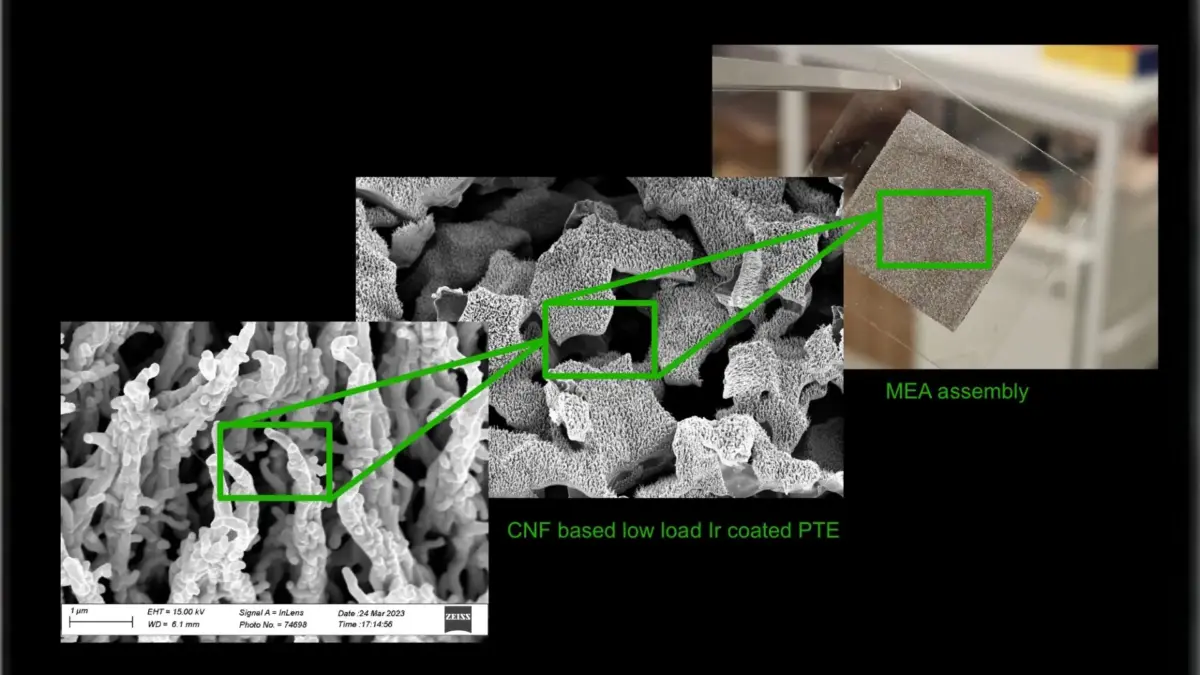
On the flip side of that coin, we find Smoltek Hydrogen, which applies the same carbon nanotechnology platform to enable PEM electrolyzer based Gigafactory a possibility. Hydrogen is a key enabler of the green energy transition, and Smoltek Hydrogen’s innovations aim to make its production more efficient, scalable, recyclable and cost effective through minimal usage of scarce mined materials (e.g. Ir, Pt etc.) [7].
Why does it matter to AI, you may wonder, and the answer is simple: The requirements for AI power sources must be fulfilled.
Just to give a perspective of AI energy needs; global power demand from AI data centers alone could reach 68 GW by 2027 and 327 GW by 2030, compared to a total global data center capacity of only 88 GW in 2022. AI training could require up to 1 GW in a single location by 2028, and as much as 8 GW – the equivalent of eight nuclear reactors – by 2030 [8].
Using carbon nanostructures, Smoltek Hydrogen enhances the performance of electrolyzer cell materials, increasing surface area, current density and catalytic activity. This leads to more efficient water splitting and lower production costs — especially important for green hydrogen, which is generated using renewable energy. This will help reduce carbon emissions from AI’s energy needs.
By pushing the limits of material science, Smoltek Hydrogen aims at making AI power sources greener, sustainable and enabler of CO2 footprint reduction per computational consumption — another crucial step in aligning AI technological progress with environmental responsibility.
My journey with Smoltek – through collaborations and industrial engagements – reflects a broader mission: to connect academic insights with industrial impact. The reason for this is that too often, groundbreaking research remains confined to laboratories, and my ambition has always been to help translate these discoveries into technologies that solve real-world problems.
Therefore, it is encouraging to witness Smoltek emerging as a powerful example of how deep-tech research can directly impact global sustainability goals.
It is perhaps a research topic by itself to reflect on how a single technology platform of innovation — carbon nanostructures — can serve vastly different commercial market domain, yet again, as of now, converges through AI hardware platform needs.
However, this convergence of disciplines is not just exciting, but it is necessary. The challenges we face today — climate change, scarcity of energy & raw materials, and digital transformation — require solutions that span across sectors. By fostering collaboration between researchers, engineers, and industry leaders, we can accelerate the path from idea to impact.
Smoltek Semi and Smoltek Hydrogen may serve different markets, but they share a common foundation: advanced carbon nanotechnology and a commitment to sustainability. Together, they represent the two sides of AI’s potential — one driving smarter electronics, the other enabling clean energy source.
This dual innovation thesis reflects a deeper truth: the future of AI is not just about smarter algorithms, but also about smarter materials and greener systems. Smoltek’s work — and the collaborative spirit behind it — offers a compelling vision of how technology can serve both progress and the planet. One technology platform but many possibilities!
Disclaimer: the opinions that are expressed here are of my own.
References:
[1] Breaking Barriers, part I: The Hype;
[2] Breaking Barriers, part II: The Reality;
[3 ]Breaking Barriers, part III: The Future
[4] www.lesswrong.com/posts/bdQhzQsHjNrQp7cNS/estimates-of-gpu-or-equivalent-resources-of-large-ai-players
[5] Smoltek demonstrates the thinnest capacitor in the world
[6] Capacitor: https://passive-components.eu/smolteks-cnf-mim-capacitor-break-1-%C2%B5f-mm%C2%B2/
[7] Smoltek’s low-iridium PTE reach target of 0.1 mg iridium/cm2
[8] www.rand.org/pubs/research_reports/RRA3572‑1.html
[9] Model: https://ieeexplore.ieee.org/document/9501815 (High-frequency electrical circuit model for integrated capacitors utilizing lossy nanostructures)
[10] CNF-MIM small scale production
Your data will be handled in compliance with our privacy policy.
IR Blog Posts

January 9, 2025
Modern electronics demand increasingly compact and powerful capacitors, and the race for miniaturization has reached a critical juncture. While both Deep Trench Capacitors (DTC) and Carbon Nanofiber Metal-Insulator-Metal (CNF-MIM) capacitors are being developed for advanced applications requiring smaller size and higher capacitance density than conventional surface-mounted capacitors, DTC pushes the boundaries of what’s achievable with subtractive manufacturing, but is hitting fundamental physical limits. In contrast, Smoltek’s innovative CNF-MIM technology offers a revolutionary path forward, unrestricted by these constraints.
IR Blog Posts

October 1, 2024
Smoltek Semi has developed a new material for use in CNF-MIM capacitors. The new material increases capacitance by more than three times and reduces leakage current by 50 percent. In this article, we examine what this means and why it is good for shareholders and investors.
IR Blog Posts

October 11, 2024
Our innovative “zapping” method drastically reduces development time and costs, enabling us to advance CNF-MIM technology faster and making Smoltek Semi’s technology even more attractive to potential buyers. Read on to see how this new process strengthens our position and shortens our path to market.
IR Blog Posts

June 16, 2025
Smoltek Semi joins an elite club of companies achieving 1 µF/mm² capacitance density, but stands alone in reaching this milestone with an ultra-thin profile. This breakthrough unlocks the under-chip real estate that represents the holy grail of capacitor placement in modern electronics.
IR Blog Posts

July 30, 2025
The recently signed technical service agreement between Smoltek Semi and the Industrial Technology Research Institute (ITRI) of Taiwan changes how CNF-MIM capacitors will reach the market. This partnership delivers the validation and manufacturing capabilities needed to transform laboratory breakthroughs into commercial reality.
News
June 18, 2025
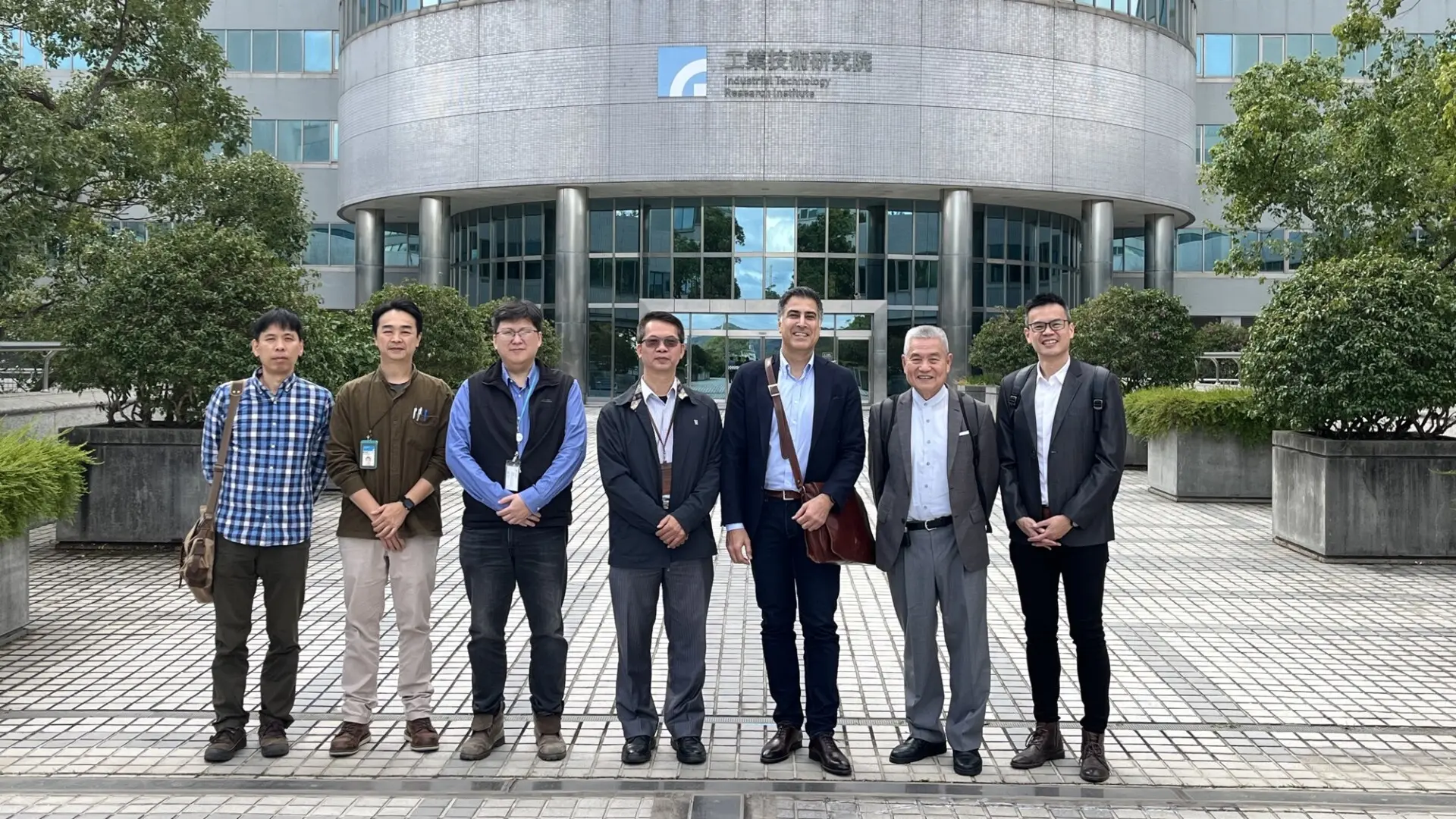
Smoltek Semi has initiated the signing of a technical service agreement with the Taiwanese Industrial Technology Research Institute (ITRI) that enables low-volume production of Smoltek's propriety CNF-MIM capacitors.