Sign up for our newsletter!
Your data will be handled in compliance with our privacy policy.

The 2026 YAGEO AI Summit in Taipei was not simply a product showcase. It was a strategic positioning exercise by one of the world’s largest passive component manufacturers to establish itself as a foundational enabler of the AI infrastructure buildout now underway globally.
Fredrik Liljeberg • May 8, 2026
I’m truly grateful, as Smoltek CEO to be invited to participate in these discussions that reflect the growing relevance of ultra-thin capacitor technologies in the future AI infrastructure stack. I had the great honor of meeting the Yageo management team discussing the future of ultra-thin capacitor technology and not least meeting Mr. Pierre Chen, the truly inspiring founder and chairman, The vision and road map for accelerating AI as a leading player is already being executed with speed by Yageo.
Magnus Andersson, CEO at Smotek
What began as a race to build larger AI models is rapidly becoming a race to build the infrastructure capable of powering them. At the 2026 AI Summit hosted by YAGEO Group in Taipei, industry leaders gathered around a common realization: scaling AI is no longer only a software challenge — it is fundamentally an infrastructure challenge.
This shift is creating major opportunities across the hardware ecosystem, especially for companies developing next-generation solutions in power delivery, advanced materials, and component miniaturization.
For Smoltek, participation in these discussions reflects the growing relevance of ultra-thin capacitor technologies in the future AI infrastructure stack.
“Yageo has shown an amazing performance and journey towards high-tech AI solutions displayed at the Yageo AI Summit in Taipei. The transition to the next generation AI infrastructure requires new levels of performance and power distribution built with advanced new materials.“
Magnus Andersson
The scale of investment now being directed toward AI infrastructure is unprecedented and according to Dell’Oro Group, global data center capital expenditures are projected to reach approximately $1.7 trillion annually by 2030, driven primarily by AI workloads and hyperscale infrastructure expansion. McKinsey estimates the broader AI-driven data center buildout could require as much as $6.7–7 trillion in cumulative global investment by 2030. (McKinsey & Company).
Investments are driven by capacity demand in AI-related data centers that are projected to increase 3.5x by 2030 (McKinsey & Company) and the four largest hyperscalers alone are expected to spend nearly $600 billion in 2026 on AI infrastructure. (PR Newswire). The numbers illustrate a structural shift where AI is becoming one of the largest infrastructure investment cycles in modern technology history.
As AI processors become more powerful, energy consumption and power integrity are emerging as key constraints. Modern AI accelerators already consume hundreds of watts per chip, and future generations are expected to push significantly higher. Research on AI supercomputers shows that power requirements for leading systems have historically doubled approximately every year. A small processor (xPU) requires 1 kW in power, more than modern vacuum cleaner (that requires about 0.6–0.8 kW).
This creates increasing pressure on:
In practical terms, the industry is approaching physical limitations in how efficiently power can be delivered to next-generation processors. This is where advanced capacitor technologies become strategically important.
Smoltek’s CNF-MIM capacitor technology is being developed specifically to address these emerging requirements through: Ultra-thin form factors, high capacitance density potential, improved integration close to processors and support for advanced semiconductor packaging architectures. As AI systems continue to scale, enabling technologies at the component level may become increasingly critical to overall system performance.

Another important theme at the summit was the rapid growth of Edge AI that drives demand for data processing capacity and advanced components and power supply in applications such as AI PCs, Smartphones, Automotive, Robotics, Industrial automation and IoT systems.
This expansion dramatically increases the number of devices requiring advanced power architectures and miniaturized electronic components.
Industry forecasts estimate billions of AI-enabled edge devices will enter the market over the coming years, creating substantial demand for more compact, energy-efficient electronic solutions.
The opportunity for Smoltek CNF-MIM capacitor technology therefore extends beyond hyperscale infrastructure and into a much broader global electronics market.
The growth of AI infrastructure is also creating entirely new energy challenges.
The industry reality is that future AI competitiveness will not only depend on compute performance, but also on how efficiently power can be distributed, managed, and utilized throughout the infrastructure stack. This trend strengthens the long-term market relevance of technologies capable of improving power efficiency and component integration.
The AI infrastructure market is evolving through increasingly interconnected ecosystems involving:
Participation in strategic industry forums therefore matters. Smoltek’s CEO Magnus Andersson attended the summit and met with senior YAGEO leadership to discuss future AI infrastructure requirements and next-generation capacitor technologies.
For Smoltek, these discussions represent an opportunity to position its technology within one of the fastest growing and most strategically important industrial transitions globally.
The AI transition is still in its early stages.
What is increasingly clear is that long-term value creation will extend far beyond software and models. The physical infrastructure layer — including power delivery, advanced materials, and miniaturized components — is becoming equally important. As global AI infrastructure investments accelerate toward multi-trillion-dollar levels, demand for enabling technologies that improve efficiency, density, and system performance is expected to grow alongside it.
For Smoltek, this represents an opportunity to participate in a long-duration structural growth market driven by the global expansion of AI infrastructure.
Want to learn more about the extremely small and ultra-thin CNF-MIM capacitor? Go here!
Your data will be handled in compliance with our privacy policy.
IR Blog Posts

January 9, 2025
Modern electronics demand increasingly compact and powerful capacitors, and the race for miniaturization has reached a critical juncture. While both Deep Trench Capacitors (DTC) and Carbon Nanofiber Metal-Insulator-Metal (CNF-MIM) capacitors are being developed for advanced applications requiring smaller size and higher capacitance density than conventional surface-mounted capacitors, DTC pushes the boundaries of what’s achievable with subtractive manufacturing, but is hitting fundamental physical limits. In contrast, Smoltek’s innovative CNF-MIM technology offers a revolutionary path forward, unrestricted by these constraints.
IR Blog Posts

October 1, 2024
Smoltek Semi has developed a new material for use in CNF-MIM capacitors. The new material increases capacitance by more than three times and reduces leakage current by 50 percent. In this article, we examine what this means and why it is good for shareholders and investors.
IR Blog Posts

October 11, 2024
Our innovative “zapping” method drastically reduces development time and costs, enabling us to advance CNF-MIM technology faster and making Smoltek Semi’s technology even more attractive to potential buyers. Read on to see how this new process strengthens our position and shortens our path to market.
IR Blog Posts

June 16, 2025
Smoltek Semi joins an elite club of companies achieving 1 µF/mm² capacitance density, but stands alone in reaching this milestone with an ultra-thin profile. This breakthrough unlocks the under-chip real estate that represents the holy grail of capacitor placement in modern electronics.
IR Blog Posts

July 30, 2025
The recently signed technical service agreement between Smoltek Semi and the Industrial Technology Research Institute (ITRI) of Taiwan changes how CNF-MIM capacitors will reach the market. This partnership delivers the validation and manufacturing capabilities needed to transform laboratory breakthroughs into commercial reality.
News
June 18, 2025
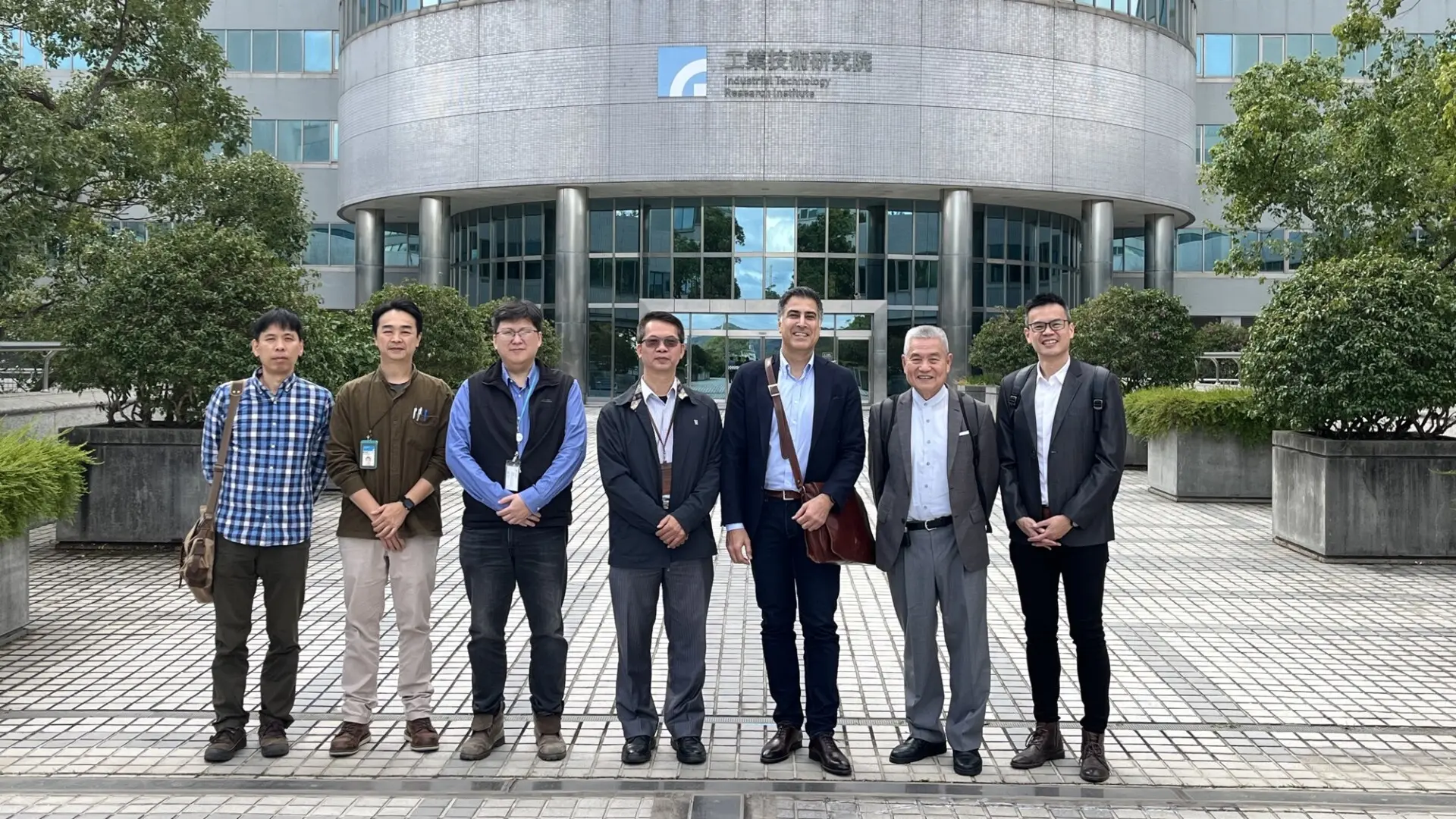
Smoltek Semi has initiated the signing of a technical service agreement with the Taiwanese Industrial Technology Research Institute (ITRI) that enables low-volume production of Smoltek's propriety CNF-MIM capacitors.