Sign up for our newsletter!
Your data will be handled in compliance with our privacy policy.
Your data will be handled in compliance with our privacy policy.
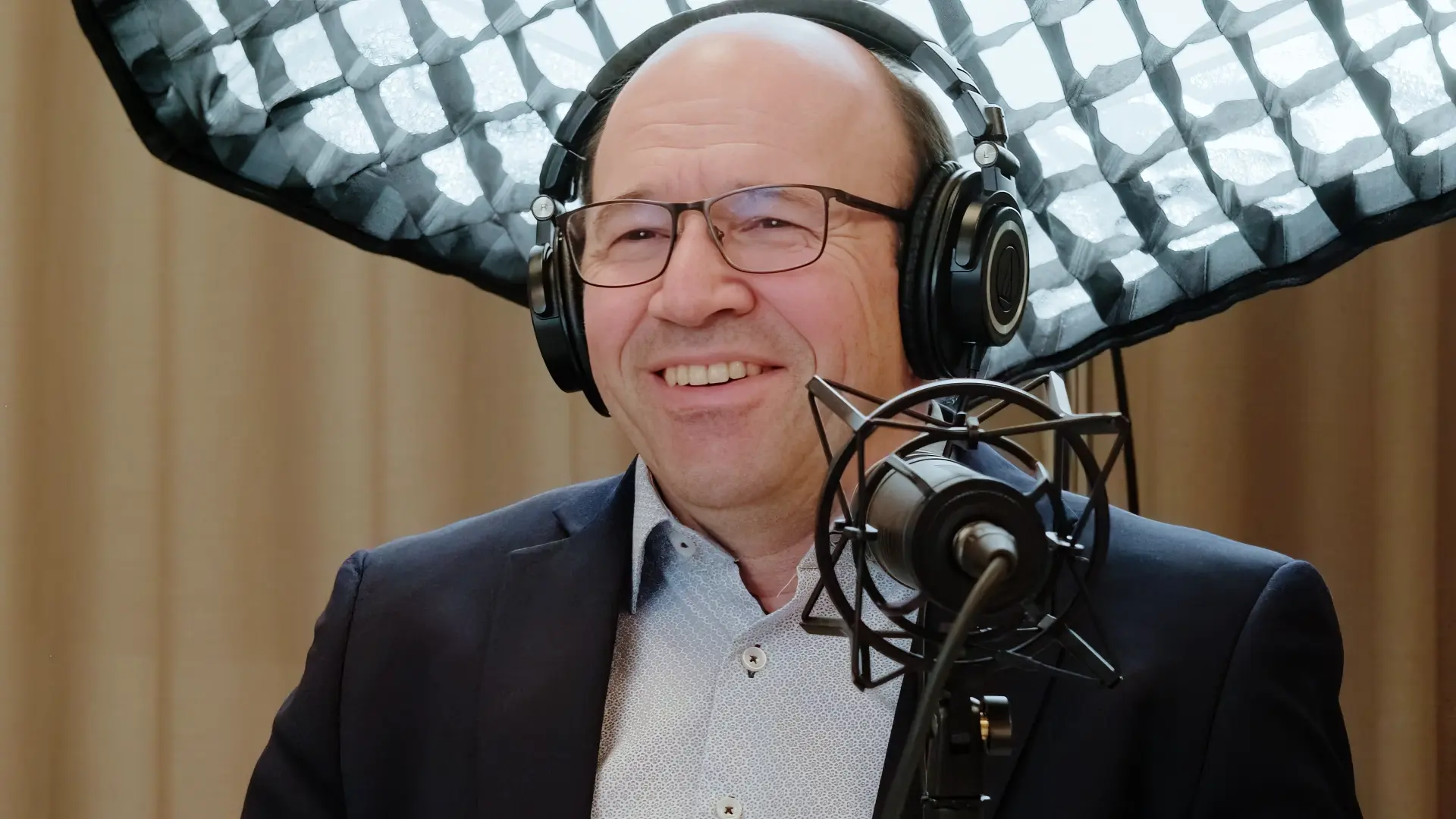
What does it take to revolutionize green hydrogen production? In the second episode of Smoltalk, CEO Magnus Andersson sits down with Dr. Fabian Wenger to explore the science, strategy, and partnerships behind Smoltek Hydrogen's breakthrough technology. Here's the complete story—from carbon nanofibers to a 95% reduction in iridium usage.
Thomas Barregren • December 15, 2025
The second episode of Smoltek’s podcast Smoltalk is now available on YouTube, Apple Podcasts, Spotify, and wherever podcasts are found. In this conversation, Magnus Andersson speaks with Fabian Wenger, Head of R&D at Smoltek Hydrogen, about everything from his personal journey to the company’s strategic industrial partnerships and the roadmap ahead.
For those who prefer reading to listening, this article covers all the essential insights from their discussion—from Fabian’s path from Switzerland to Gothenburg, to his thoughts on Smoltek Hydrogen’s collaborations with AGC, Spark Nano, Impact Coatings, and Heraeus Precious Metals, and the future plans that could reshape the green hydrogen industry.
Fabian Wenger’s journey to Smoltek began in Switzerland, where he was born to a Swiss father and Italian mother. After completing his undergraduate studies in physics at ETH Zurich, he moved to Sweden in 1990 to pursue his doctorate at Chalmers University of Technology in Gothenburg.
“I did my doctorate in solid state physics. The subject was high-temperature superconductors,” Fabian explains. “That was a topic that was very hot, and people envisioned applications like levitating trains.” While room-temperature superconductors remained elusive, the research laid foundations for today’s quantum computing technology.
After a postdoc at Princeton’s NEC Research Institute, Fabian returned to Sweden during the telecom boom. He spent 25 years in product development at companies including Ericsson before discovering Smoltek. “From the first contacts, I was fascinated by the fact that through a spin-off from Chalmers, they had invested in a completely new type of nanostructure,” he recalls.
Smoltek Hydrogen was originally founded as Smoltek Innovation, with the mission of exploring business opportunities for Smoltek’s core competency—growing electrically and thermally conductive carbon nanostructures with extreme precision—outside the semiconductor industry that Smoltek Semi was already pursuing. When the team identified green hydrogen as the most promising application, the subsidiary shifted focus and changed its name to Smoltek Hydrogen.
The timing was crucial: Swedish industry was launching major initiatives like H2 Green Steel and the Hybrit project, a collaboration between LKAB, SSAB, and Vattenfall. “The connection between the large surface area that these nanofibers can create and the fact that it could be interesting for catalytic processes was clearly there,” Fabian explains. Green hydrogen offered both a massive market opportunity and an urgent need that aligned perfectly with Smoltek’s capabilities.
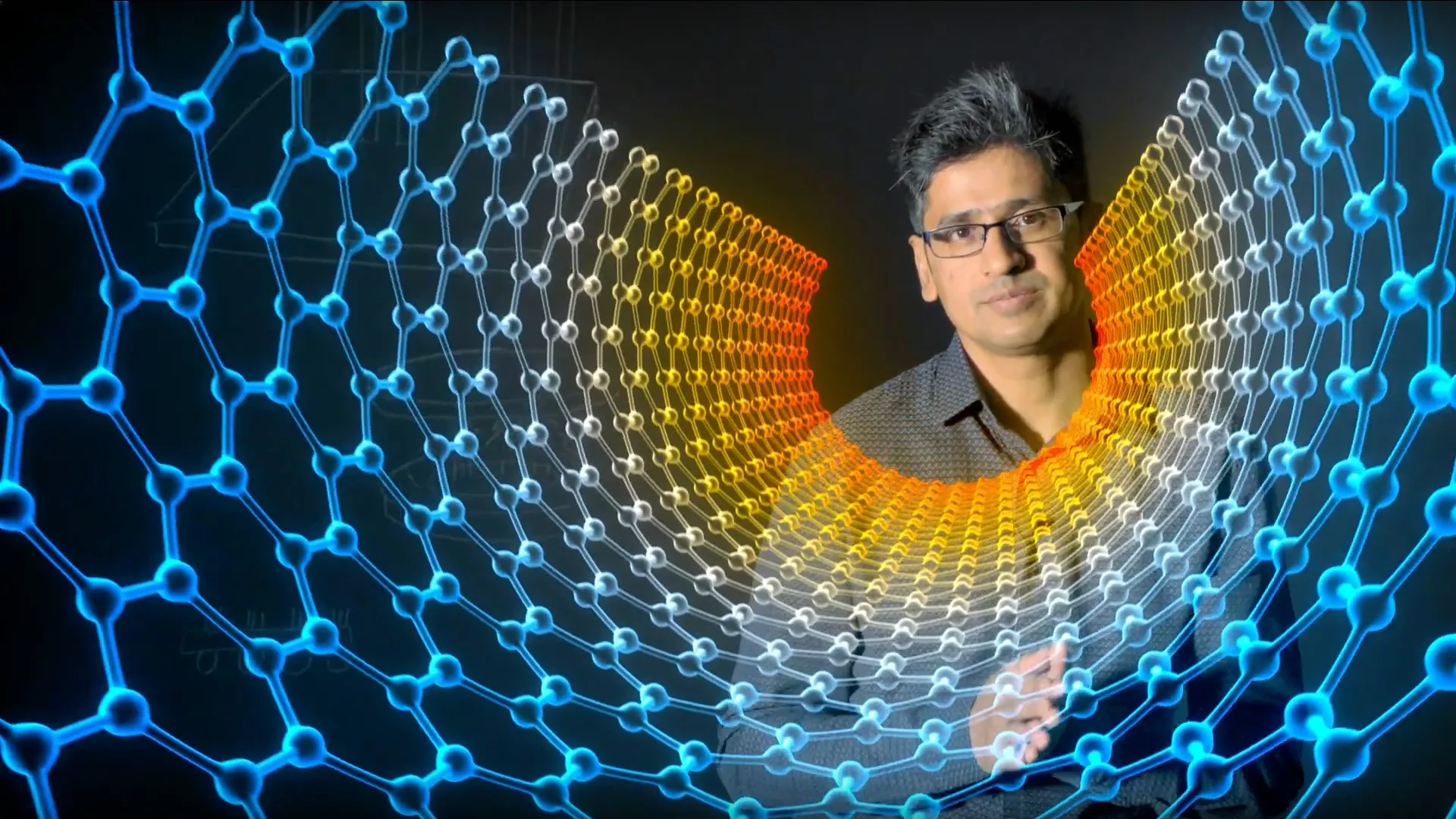
The foundation of Smoltek’s technology is deceptively simple: growing carbon nanofibers on a surface. “That’s the common denominator for everything we do, and that creates this 3D surface effect,” Fabian notes.
This expanded surface area enables two related benefits. First, less precious metal catalyst is needed to achieve the same reaction rates. Second, the same amount of catalyst delivers higher performance. “It’s either more efficient use of the material or higher performance,” Fabian summarizes.
The key lies in precise control. Smoltek creates millions of extremely thin fibers on a surface in an even, uniform pattern. The precious metal catalyst then coats these nanofiber structures, maximizing contact with the reactants.
In water electrolysis, an electrical current splits water molecules into hydrogen and oxygen. Several technologies exist, but PEM (Proton Exchange Membrane) electrolysis offers distinct advantages: it operates at very high current densities, requires less surface area, and—critically—can rapidly adjust to fluctuating power inputs.
“That’s crucial because much of the green energy that we’re now installing isn’t there constantly,” Fabian explains. Wind and solar power vary with conditions, and PEM electrolyzers can ramp up and down accordingly.
The process works through a carefully orchestrated molecular dance. On the anode side, water molecules are absorbed by iridium catalyst, where oxygen atoms bind to the surface and release hydrogen ions (protons). These protons migrate through the membrane to the cathode, where they combine to form hydrogen gas. Meanwhile, oxygen atoms pair up and exit as oxygen gas—safely separated from the hydrogen by the membrane.
For industrial electrolyzers that must operate reliably for ten or more years, iridium oxide has emerged as the catalyst of choice. “The best trade-off between stability and activity is a catalyst of iridium,” Fabian confirms.
The catalyst dramatically reduces the energy required to split water molecules—and since electricity is the primary cost driver in hydrogen production, catalyst efficiency directly impacts the price of green hydrogen.
Here lies the industry’s fundamental challenge: only 7 to 9 tons of iridium are mined globally each year, and it’s never mined directly—only as a byproduct of platinum extraction. This scarcity threatens to bottleneck the entire green hydrogen industry’s growth.
“Our great strength is that we can use incredibly much less iridium than our competitors,” Fabian states. “We’ve announced that we can reach 0.1 milligrams per square centimeter. And that’s where we have our strongest card.”
Smoltek has defined its product as a Porous Transport Electrode, or PTE. This combines a porous titanium transport layer, vertically grown carbon nanofibers, a platinum corrosion-protection layer, and iridium catalyst deposited atom by atom.
“I would say that it’s really us who are pioneers in making this type of nanostructure for this application,” Fabian asserts. The company has built a strong patent portfolio around this solution.
When Smoltek began developing its technology, the industry was focused almost exclusively on CCM (Catalyst Coated Membrane), where catalysts are applied directly to the membrane. Over time, the market has shifted.
“There’s been a clear shift toward this type of PTE solution, especially on the anode side where you’re working with iridium,” Fabian observes. “That’s really where you want such technology going forward to open up the whole window toward growth and low iridium consumption.”
The numbers tell a compelling story. Smoltek’s technology delivers a 95% reduction in iridium usage compared to conventional approaches. But the benefits extend beyond material savings.
“Our competitiveness is already there today on a small scale,” Fabian explains. “But in large-scale production, we could get down to maybe one-sixth of competing products’ price. So we have an enormous competitive advantage.”
This dual benefit—removing the iridium scarcity bottleneck while dramatically reducing costs—positions Smoltek to enable industry-wide scaling of green hydrogen production.
As a relatively small company targeting a huge and growing industry, Smoltek has strategically partnered with established suppliers to build a scalable solution. “We bring an innovation. We show that we have a technology that’s scalable, but then there needs to be a supply chain,” Fabian explains.
AGC, the major Japanese industrial company, brings a plasma source technology critical for growing carbon nanofibers at industrial scales. Industrial electrolyzer electrodes measure approximately half a meter by half a meter. “The technology that AGC has guarantees that we can actually work with a CVD process that’s scalable to those areas and also to the volumes of tens of thousands or hundreds of thousands of square meters per year,” Fabian notes. AGC has also announced investments in hydrogen industry membranes, with a major factory under construction.
Impact Coatings is already established in the hydrogen industry with coating processes and equipment. “Impact Coatings is also already in this industry with their coating processes, their machines, they also do some customer service, so they’re an important piece of the puzzle for us,” Fabian explains.
Spark Nano specializes in Atomic Layer Deposition (ALD)—building coatings atom by atom. For Smoltek, this enables precise platinum deposition for corrosion protection, maximizing utilization of precious metals with reasonable cost structure at scale.
Heraeus, one of Europe’s largest family-owned companies with roots in the 1600s, is today a world leader in catalytic materials. “We’re very proud that we have a partnership with them and that they also see that this is an opportunity to create growth for this green hydrogen economy,” Fabian says.
The partnership combines Smoltek’s carbon nanofiber expertise with Heraeus’s catalyst materials knowledge. Together, they’re evaluating technology steps toward industrial prototypes and sufficient durability, with the goal of offering solutions to joint customers.
The partnership with Heraeus opens possibilities for alternative catalyst formulations. “There are possibilities for other elements involved like ruthenium-iridium. And even other variants,” Fabian notes. These combinations could further optimize catalyst performance while reducing the dependency on pure iridium.
When asked how low iridium usage could ultimately go, Fabian’s answer is striking: “You really don’t see any limitations downward. It opens up a field. You can go to 0.1 and even much lower through various tricks.”
While Smoltek Hydrogen’s primary focus is PEM electrolysis for green hydrogen production, fuel cells represent a closely related opportunity. Approximately 80% of components in PEM electrolyzers are also used in fuel cells—which are essentially electrolyzers running in reverse, consuming hydrogen to produce electricity.
Smoltek sees two opportunities in fuel cells. First, carbon nanofibers alone can reduce contact resistance, improving efficiency and conversion rates. Second, the nanofibers can serve as catalyst carriers, typically using platinum for fuel cell applications.
“We’ve been contacted by industrial players. They’ve partly bought samples from us and have gotten good results,” Fabian confirms.
Smoltek’s development work spans two key facilities. The company was founded at Chalmers University of Technology’s Department of Microtechnology and Nanoscience (MC2) twenty years ago. Ever since, Smoltek has used MC2’s cleanroom and advanced analytical equipment for critical carbon nanostructure growth processes. “MC2 is where we have our roots,” Fabian notes.
H2 Labs is Smoltek Hydrogen’s in-house laboratory where the team can test complete cells at laboratory scale. “That’s where we can test complete cells at lab scale […] and extract their maximum performance and durability.” Fabian explains.
Smoltek Hydrogen’s plan for the next two years is clear. “Over these two years, we want to convince customers that this is our solution. And that it can be industrialized. So that they have everything in hand to use this in serious product development,” Fabian outlines.
This involves continuing to demonstrate performance across different cell sizes, stress testing over extended periods, and proving the scalability of the underlying manufacturing chain.
The timing aligns with industry realities: large electrolyzer factories built in recent years haven’t yet reached full capacity. “For the next generation, we’re highly relevant to be able to produce next-generation cost-effective electrolyzers,” Fabian explains. Within four to five years, the industry will reach gigawatt scales—and efficient raw material utilization will determine competitive advantage.
Beyond market timing, hydrogen offers unique advantages for energy resilience. Unlike batteries, hydrogen can store energy across seasons. “If the grid goes down, we still need to be able to get energy in some form,” Fabian notes. “Hydrogen and hydrogen derivatives are possible ways to store energy and actually extract electrical energy in a critical situation.” As Europe’s focus on energy security intensifies, this capability becomes increasingly valuable.
While Smoltek Hydrogen focuses on electrolyzers, the underlying nanotechnology platform developed by parent company Smoltek has broader potential. Before Smoltek Hydrogen narrowed its focus to hydrogen, the team explored several other promising markets.
“The company had already worked with supercapacitors, for example, which sit between capacitors on one side and batteries on the other,” Fabian recalls. Contact resistance challenges also affect solid-state batteries—“a major market going forward”—and medical applications showed promise as well.
“When you get down to nanotechnology, there’s a clear advantage for many verticals,” Fabian observes. These applications remain potential opportunities for Smoltek to pursue through new subsidiaries, just as they created Smoltek Hydrogen to focus on the hydrogen market. Success requires the classic product-market fit: “The market must be there when we have the product ready and vice versa.”
Fabian offers a clear perspective on Smoltek’s positioning: “The positioning is exceptional, having the two biggest megatrends of our time.”
What he means is that Smoltek’s two subsidiaries are each positioned to address one of the defining technological shifts of our era. Smoltek Semi enables continued AI development by providing ultra-thin capacitors that ensure stable power supply to the chips performing the intensive calculations AI requires. Smoltek Hydrogen enables the green energy transition by ensuring that sufficient electrolyzers can be built at reasonable cost—despite the dependence on extremely scarce iridium.
“I think an investment in Smoltek is an investment in what’s timely and in our future,” Fabian concludes.
The full conversation between Magnus Andersson and Fabian Wenger is available on Smoltek’s YouTube channel and as episode two of the Smoltalk podcast on Apple Podcasts, Spotify, and other podcast platforms. For those who want to hear the nuances firsthand—including Fabian’s Swiss-accented Swedish—the original recording awaits.
Your data will be handled in compliance with our privacy policy.
IR Blog Posts
December 12, 2025
Smoltek conducts advanced research and innovation based on nanotechnology to develop new material technology opportunities that can solve many of today's industrial challenges. This journey began 20 years ago, when Dr. Shafiq Kabir, together with David Brudö and Dr. Peter Enoksson, founded the company.
IR Blog Posts

April 14, 2025
Taking a breakthrough technology from the lab bench to the world market often requires collaboration with large industrial enterprises. In this interview, Ellinor Ehrnberg, president of Smoltek Hydrogen, explains how the company aligns its own development with that of potential buyers while navigating the complex journey from initial interest to strategic partnership.
IR Blog Posts

November 20, 2025
In the first ”Smoltalk” podcast, CEO Magnus Andersson is joined by Smoltek Semi CTO Dr. Farzan Ghavanini for a technical deep dive. Dr. Ghavanini discusses the core CNF-MIM technology in detail, covering everything from its unique material properties and AI applications to the complete product roadmap, key partnerships, and future integration plans. This article summarize the highlights of the conversation.
IR Blog Posts

April 22, 2025
While traditional development processes often progress at a measured pace, truly disruptive technologies, such as Smoltek’s Porous Transport Electrode (PTE), can dramatically compress timelines. When faced with potentially market-changing innovations, industrial enterprises must choose between maintaining the status quo, slow internal development, or embracing partnership with innovative companies like Smoltek Hydrogen.
IR Blog Posts

October 29, 2025
At the Hydrogen Technology World Expo 2025 in Hamburg, Ellinor Ehrnberg, President of Smoltek Hydrogen, joined a high-level panel to debate one of the industry’s most pressing challenges: How can green hydrogen be scaled fast enough—and affordably enough—to meet the world’s decarbonization goals?
IR Blog Posts

January 15, 2025
When experts talk about the energy systems of the future, they often come back to one specific number: 0.1 milligrams per square centimeter (0.1 mg/cm²). This seemingly insignificant number could be critical to moving green hydrogen from a promising concept to an economic reality.