Sign up for our newsletter!
Your data will be handled in compliance with our privacy policy.


When experts talk about the energy systems of the future, they often come back to one specific number: 0.1 milligrams per square centimeter (0.1 mg/cm²). This seemingly insignificant number could be critical to moving green hydrogen from a promising concept to an economic reality.
Thomas Barregren • January 15, 2025
Green hydrogen is a promising solution for decarbonizing industrial processes, but high production costs are holding back development. A key bottleneck is the reliance on the precious metal iridium in the electrolysis. To make the technology economically viable, iridium use must be reduced to 0.1 milligrams per square centimeter – a technical challenge that could determine the future of hydrogen as an energy carrier.
Hydrogen is not only the simplest and most abundant element in the universe, it is also a fundamental part of our industrial economy. Global demand is approximately 95 million tons per year, with industrial processes accounting for more than 99 % of consumption.
In the petrochemical industry, hydrogen is essential for desulfurization and hydrocracking in oil refining. The chemical industry relies on hydrogen to produce ammonia for fertilizer – a process that literally feeds half the world’s population. Methanol production, another major hydrogen consumer, provides industry with chemical building blocks for countless everyday products.
Less than 1 % of all hydrogen is produced by electrolysis using electricity from renewable sources or nuclear power. This low figure is due to the fact that hydrogen produced in this way is 2–5 times more expensive than hydrogen produced from fossil fuels. As a result, 96 % of all hydrogen is produced directly or indirectly from natural gas, oil and coal, at low economic cost and a sky-high price for the climate. For every kilogram of hydrogen produced today, up to ten kilograms of carbon dioxide are released directly into the atmosphere.
Unfortunately, the climate cost pales in comparison to the production price. If the industry is to switch to green hydrogen – hydrogen produced by electrolysis of water using electricity from renewable sources – the cost must come down to the same low price as its dirtier cousins: gray, brown and black hydrogen.
Hydrogen is one of the key means to achieve Net Zero Emissions (NZE). In addition to being a raw material for industry, as it is today, hydrogen will perform two functions that are essential for reducing CO2 emissions:
In this way, hydrogen can contribute 10 % of the emissions reductions needed to meet the target of no more than a 1.5 °C increase in global warming. But this will require much more hydrogen than today – and it will have to be low-emission hydrogen – hydrogen produced by electrolysis with green electricity, from biomass, or from fossil fuels where carbon dioxide is captured and stored.
In an NZE scenario for 2050, the International Energy Agency (IEA) has calculated that today’s hydrogen production will have to double by 2030 and increase sixfold by 2050, with 98 % being low-emission hydrogen. The IEA expects that 76 % of all hydrogen, or 327 out of 430 megatons, will be produced by electrolyzers.
There is little doubt that the market for electrolyzers could explode in the coming years.
But…
This assumes that hydrogen produced in an electrolyzer becomes competitive with hydrogen produced from fossil fuels. The price of green hydrogen must therefore be reduced by 50 to 80 %.
So what makes hydrogen made from cheap water and electricity more expensive than hydrogen made from expensive natural gas, oil and coal?
The root cause is the cost of building a PEM electrolyzer. More precisely, one crucial material drives this cost: iridium.
This precious metal is essential for splitting water (H2O) into hydrogen (H2) and oxygen (O2). It is used on the oxygen-producing side of the membrane that separates the oxygen and hydrogen production sides.
Iridium is one of the rarest elements in the earth’s crust. 90 % comes from South Africa and Zimbabwe, with the remaining production coming from Russia and North America. It is so rare that it is not economically viable to mine iridium specifically. Instead, it is extracted as a by-product of platinum and nickel mining.
The global supply of iridium is and will remain very limited – only 7–8 tons are produced annually.1 This makes it one of the most expensive metals in the world, 2–3 times more expensive than gold.
It doesn’t take much iridium per square centimeter of membrane to power the process – just 2 milligrams. Yet the metal accounts for 20–25 % of the cost of the plant. And the profit from large-scale operation is negligible because the membrane surface area increases in proportion to the number of megawatts the plant must handle.
Iridium is a must. Iridium is expensive. And the price is not going down – in fact, it is going up as demand increases. So what is the solution?
Use less iridium!
Tiny 2 milligrams may not sound like much. But it’s a huge amount compared to what’s needed to power the process. In theory, an atom-thin layer of iridium is enough to make hydrogen. But much more is used. This is due to materials engineering challenges.
But if green hydrogen is to be competitive with dirty hydrogen, the amount of iridium used must be significantly reduced. There are already electrolyzers that use half the amount, and in the lab they have managed to halve it again. But that is not enough.
To be competitive, the amount of iridium must be reduced by 95 percent – to 0.1 milligrams per square centimeter. This is the holy grail of the hydrogen industry.
When you break down the numbers, it becomes clear why 0.1 mg/cm² is the holy grail.
At today’s deposition rates of 1–2 mg/cm², one gigawatt of electrolyzer capacity requires about 400 kg of iridium – a staggering 5 % of the world’s annual production. At an iridium price of about 150,000 USD per kilogram,2 the catalyst cost alone for such a plant is 60 million USD. A reduction to 0.1 mg/cm² would reduce this cost to 6 million USD – a dramatic difference that fundamentally changes the calculus for large-scale hydrogen projects.
From a supply chain perspective, 0.1 mg/cm² is even more critical. With today’s technology at 1–2 mg/cm², the use of electrolyzers would quickly consume more iridium than is available, and prices would skyrocket. At 0.1 mg/cm², the equation is very different. Less than 30 kg of iridium would be required to build one gigawatt of electrolyzer capacity. Annual iridium production, along with recycling of spent catalysts, would be more than enough to meet the 2050 targets – while meeting the needs of other critical industries.
For over twenty years, we have developed a unique capability to precisely grow electrically connected carbon nanofibers. Our business idea is to use this capability to solve complex materials engineering challenges in wholly owned subsidiaries. When we recognized the hydrogen industry’s challenge to reduce iridium usage to 0.1 mg/cm², it was natural to create Smoltek Hydrogen to find the Holy Grail. Now we are very close.
Your data will be handled in compliance with our privacy policy.
IR Blog Posts

April 14, 2025
Taking a breakthrough technology from the lab bench to the world market often requires collaboration with large industrial enterprises. In this interview, Ellinor Ehrnberg, president of Smoltek Hydrogen, explains how the company aligns its own development with that of potential buyers while navigating the complex journey from initial interest to strategic partnership.
IR Blog Posts

January 16, 2025
In the race to make green hydrogen economically viable, researchers worldwide are pursuing the seemingly impossible: reducing iridium use in PEM electrolyzers by 95%. As Smoltek gets closer to this holy grail of 0.1 mg/cm², we examine how other technologies measure up.
News

January 16, 2025
Smoltek Hydrogen has produced hydrogen with only 0.1 mg of iridium per square centimeter in a 250-hour durability test – making our PTE a breakthrough technology for PEM electrolyzers.
IR Blog Posts

April 22, 2025
While traditional development processes often progress at a measured pace, truly disruptive technologies, such as Smoltek’s Porous Transport Electrode (PTE), can dramatically compress timelines. When faced with potentially market-changing innovations, industrial enterprises must choose between maintaining the status quo, slow internal development, or embracing partnership with innovative companies like Smoltek Hydrogen.
News
June 18, 2025
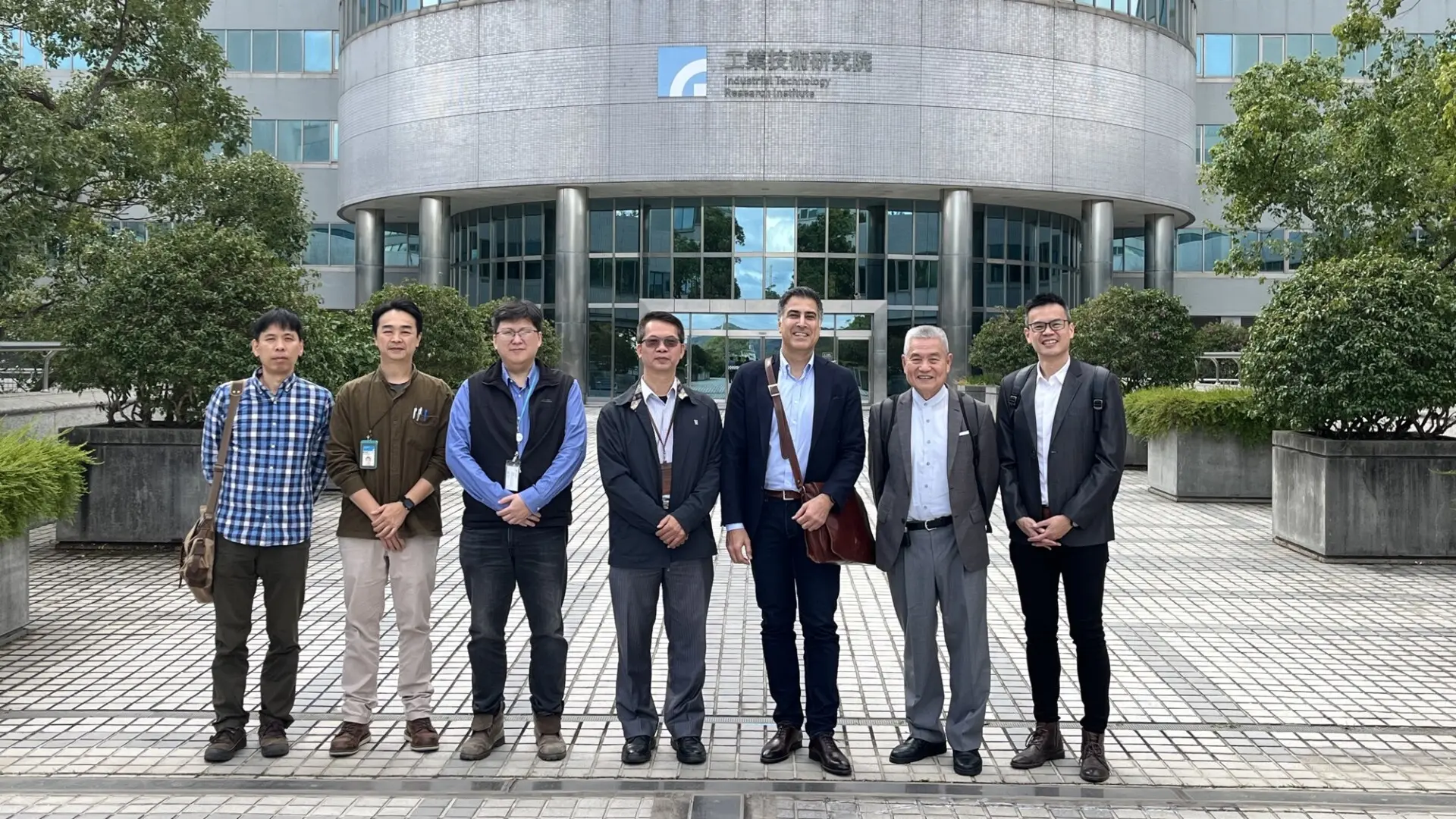
Smoltek Semi has initiated the signing of a technical service agreement with the Taiwanese Industrial Technology Research Institute (ITRI) that enables low-volume production of Smoltek's propriety CNF-MIM capacitors.
News
February 11, 2025
Smoltek Hydrogen has entered into a strategic collaboration with Heraeus Precious Metals to elevate the functional efficiency of porous transport electrodes in proton exchange membrane (PEM) electrolyzers to new heights.